1. Tags/

Norway

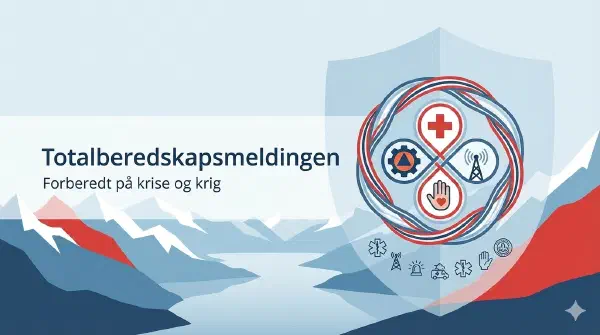
Totalberedskapsmeldingen 2025

Presented by the Prime Minister on 10 January 2025, this document follows up the Totalberedskapskommisjonen recommendations with measures including expanding Sivilforsvaret to 12,000 personnel, lifting the 1998 shelter construction ban, mandatory preparedness councils, 50% food self-sufficiency by 2030, and new cyber preparedness schemes through public-private cooperation.

FFI: Frivillige beredskapsorganisasjoner i fremtidens totalforsvar

Commissioned by Norske Kvinners Sanitetsforening, this FFI report maps the capabilities of Norway’s major voluntary emergency organisations and recommends their formal inclusion in coordination arenas at central, regional, and local levels. The research anticipates increased voluntary participation during security crises and identifies the need for legal frameworks governing their role within international humanitarian law.

Personopplysningsloven

The Norwegian Personal Data Act (Personopplysningsloven) implements GDPR in Norway through the EEA Agreement mechanism. While GDPR forms the core of Norwegian data protection law, the Act includes supplementary national rules where GDPR permits flexibility: age of consent for children’s data (13 years), national identification numbers, processing for archiving and research purposes, and employment-related processing. Datatilsynet serves as Norway’s independent supervisory authority with powers to investigate, issue orders, and impose administrative fines. The Act interacts with other Norwegian legislation including Sikkerhetsloven (national security) and Ekomloven (electronic communications), creating a comprehensive framework for data protection in Norway.

Ekomloven

The Norwegian Electronic Communications Act regulates the telecommunications sector including fixed and mobile networks, internet access, and broadcasting transmission. Providers must obtain authorization, meet quality of service requirements, and comply with net neutrality rules. The law includes provisions enabling lawful interception by law enforcement and intelligence services under court orders. Communications providers must maintain technical capabilities to intercept communications when legally required. The Act also addresses emergency communications, critical infrastructure protection, and consumer rights. Nkom (Norwegian Communications Authority) supervises compliance, while interception activities are overseen by the courts and control committees. The law complements Sikkerhetsloven for national security matters.