Table of Contents
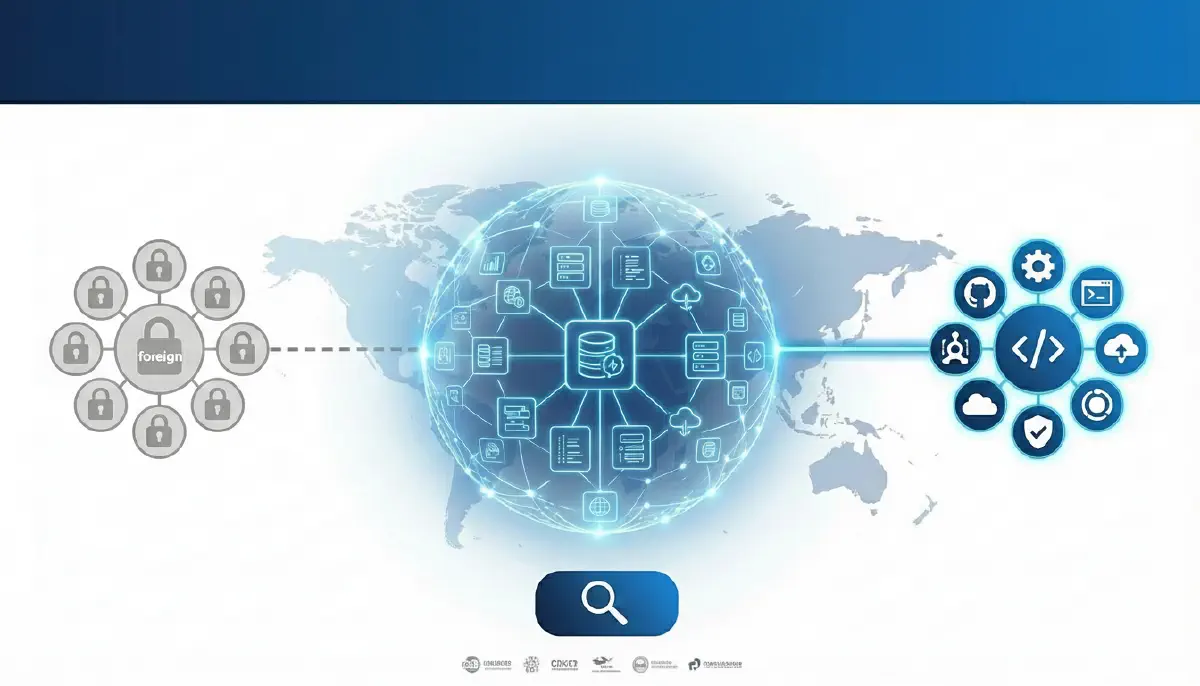
Find replacements for foreign-controlled tools. European and open-source alternatives mapped to common proprietary tools.
What It Does#
The Software Database aggregates software from multiple government-vetted and expert-curated catalogs into a unified, searchable catalog. Each product is deduplicated, categorized across four taxonomies, and enriched with vendor information, alternatives mappings, and sovereignty assessments.
Data Sources#
We prioritize government-vetted catalogs for quality and legal compliance:
| Source | Products | Publisher | Trust Level |
|---|---|---|---|
| SILL France | 626 | DINUM - French Government | Government-vetted |
| CNCF Cloud Native Landscape | 1,358 | Cloud Native Computing Foundation | Foundation-backed |
| Euro Stack | 1,103 | Abilian SAS / EuroStack Initiative (FR) | Expert-curated |
| OpenAlternative | 649 | OpenAlternative | Community-curated |
| Cloud Service Map | 582 | Google Cloud | Expert-curated |
| switching.software | 130 | Datenpunks (DE) | Expert-curated |
Planned Sources#
| Source | Publisher | Trust Level |
|---|---|---|
| openCode / ZenDiS | German Government (ZenDiS) | Government-vetted |
| Developers Italia | Italian Government | Government-vetted |
| EU OSS Catalogue | European Commission | Government-vetted |
The Challenges#
Deduplication: One Product, Many Identities#
The same software appears across catalogs with different identifiers. For example, Ansible appears as ansible, red-hat-ansible, and ansible-automation-platform depending on the source. We maintain a canonical registry with 942 product mappings that resolve duplicates across the 4,400+ raw entries from all sources.
Category Harmonization#
Each catalog uses its own category system - CNCF uses technical hierarchies, SILL France uses publiccode.yml categories, Euro-Stack uses business focus. We map all source categories to four standardized taxonomies:
- Technical (43 categories): Infrastructure capabilities
- Developer (26 categories): Development tools and frameworks
- Business (28 categories): Use cases and departments
- Platforms (8 categories): Operating systems and clouds
This requires 10,415+ lines of category mappings.
Data Enrichment#
Raw catalog data lacks context. We enrich products using Wikidata for vendor information (headquarters, founding date) and web search to validate descriptions and find missing homepages.
Goal: Fully Automated Pipeline#
The target is a weekly automated pipeline that scrapes all sources, auto-suggests canonical ID mappings using fuzzy matching, and publishes the updated catalog - flagging conflicts for human review without blocking the pipeline.