Table of Contents
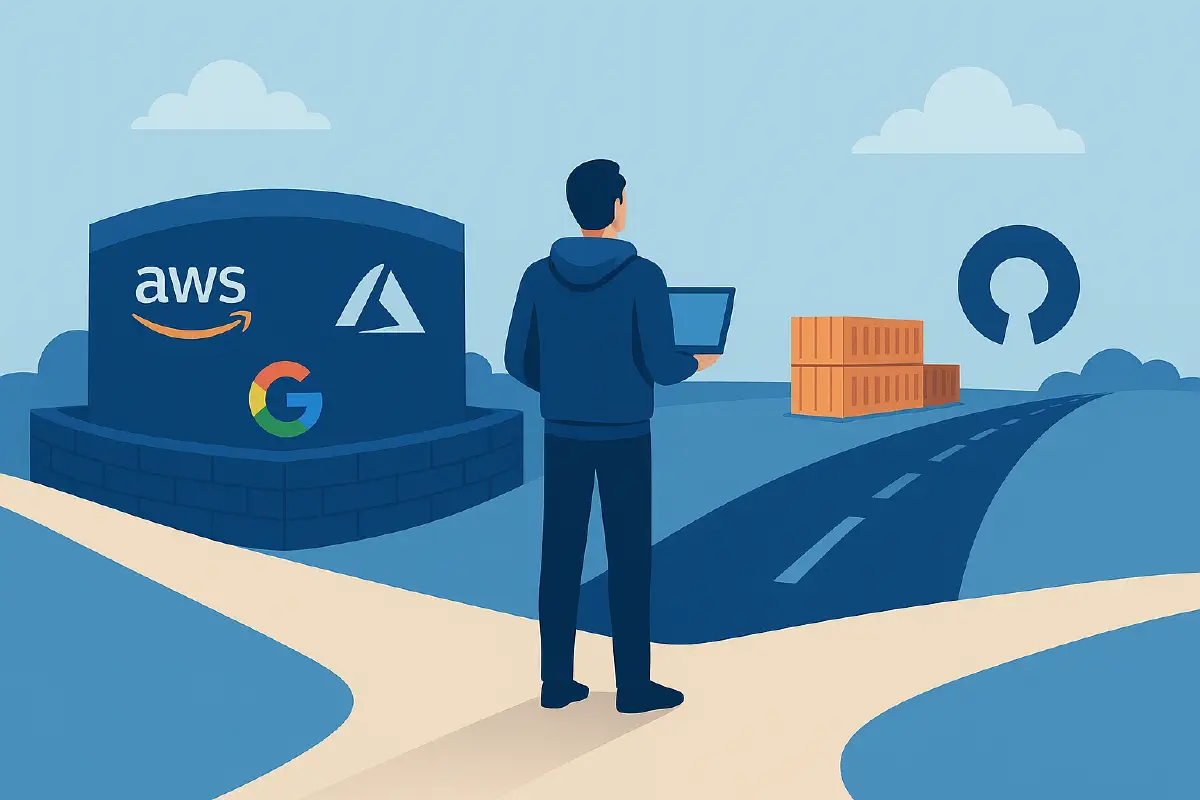
When developers spin up an Azure Function with a Service Bus trigger, or configure an AWS Lambda with SQS, they’re making a quick decision that could cost their organization millions in migration debt. The problem isn’t that these services are bad - they’re excellent. The problem is that nobody asked whether portability mattered.
The Lock-in Tax#
Research shows that 89% of organizations have adopted multi-cloud strategies, yet many remain trapped in inflexible arrangements. The numbers tell the story:
- 30-50% surprise costs from egress fees when moving data out of a cloud provider
- £894 million estimated cost to UK public bodies from overreliance on single providers
- 42% of companies considering moving workloads back on-premises to escape vendor dependencies
Basecamp famously projected $7 million in savings over five years by avoiding cloud lock-in. But the real cost isn’t just financial - it’s the inability to respond to change.
How Lock-in Happens#
Lock-in rarely comes from a deliberate architectural decision. It creeps in through convenience:
The Developer Path of Least Resistance#
A consultant joins your project for six months. They know Azure well, so they:
- Use Azure Service Bus with the native SDK (not the AMQP abstraction)
- Write Azure Functions with native triggers (not containerized with CloudEvents)
- Store data in Cosmos DB (when PostgreSQL would have worked)
- Send logs directly to Application Insights (not via OpenTelemetry)
Each decision makes sense in isolation. The code works. The deadline is met. The consultant moves on.
Six months later, your organization needs to:
- Evaluate AWS for cost optimization
- Consider European cloud providers for sovereignty
- Run services on-premise for a government client
And now you discover that “migration” means “rewrite.”
The Standards Exist - We Just Don’t Use Them#
The frustrating truth is that portable alternatives exist for almost everything:
| Proprietary Approach | Portable Alternative |
|---|---|
| Azure Service Bus SDK | AMQP protocol (or Dapr pub/sub) |
| AWS Lambda triggers | OCI containers with CloudEvents |
| Application Insights | OpenTelemetry |
| Azure AD direct integration | Standard OAuth/OIDC |
| Cosmos DB | PostgreSQL, CockroachDB |
Cloud providers support these standards. Developers just don’t use them because the proprietary path is faster to implement and better documented.
The Real Problem: No Organizational Strategy#
Most organizations have no policy requiring portable solutions. The pattern repeats:
No incentive for portability. Developers and consultants are measured on delivery speed, not long-term maintainability. Choosing the portable option takes more time upfront.
No visibility into lock-in. Technical debt from vendor dependencies doesn’t show up in sprint metrics or quarterly reviews.
No cost feedback loop. Cloud invoices go to finance, not developers. The person provisioning Cosmos DB never sees the bill.
Fragmented infrastructure. Without governance, teams spin up duplicate services. You end up with three different message queues, two databases, and four ways to store files - each with different vendor dependencies.
Breaking Free: Practical Strategies#
1. Adopt Dapr for Infrastructure Abstraction#
The Distributed Application Runtime (Dapr) provides a portable runtime that abstracts cloud-specific services. The 2025 State of Dapr Report shows:
- 96% of developers report time savings
- 60% see productivity gains of 30%+
- AWS usage grew from 22% to 38% as teams realized they could switch providers
With Dapr, your code calls standardized APIs for pub/sub, state management, and service invocation. The infrastructure binding happens in configuration, not code.
# Switch from Azure Service Bus to RabbitMQ by changing config, not code
apiVersion: dapr.io/v1alpha1
kind: Component
metadata:
  name: pubsub
spec:
  type: pubsub.rabbitmq  # Was: pubsub.azure.servicebus
  metadata:
    - name: host
      value: "amqp://localhost:5672"
2. Containerize Everything#
Package workloads as OCI containers rather than cloud-specific functions. This gives you:
- Portability across any Kubernetes cluster
- Local development that matches production
- No runtime lock-in to Lambda, Azure Functions, or Cloud Run
3. Create an Exit Strategy Before You Need One#
The EU Data Act is changing the landscape. Since 12 September 2025, cloud providers must comply with new switching obligations - removing obstacles to effective switching between providers or to on-premise infrastructure. By 12 January 2027, all switching charges including data egress fees will be prohibited entirely.
This regulatory pressure means providers can no longer use egress fees as a lock-in mechanism. But don’t wait for regulation to force your hand:
- Document all cloud service dependencies
- Identify which services have portable alternatives
- Estimate migration effort for critical workloads
- Test portability by deploying to a second provider
4. Establish Governance Without Blocking Delivery#
Create lightweight policies:
- Approved services list - What databases, queues, and storage options are supported?
- Abstraction requirements - When must code use Dapr or OpenTelemetry instead of native SDKs?
- Review triggers - New infrastructure provisioning requires brief architecture review
The goal isn’t to slow down development - it’s to make the portable choice the easy choice.
5. Make Costs Visible#
Route cloud cost data to development teams. When the developer who provisioned the premium-tier database sees the monthly bill, behavior changes.
The Portability Mindset#
Vendor lock-in isn’t inevitable. It’s the result of thousands of small decisions made without considering long-term consequences.
The organizations that will thrive are those that treat portability as a feature, not an afterthought. They’ll be able to:
- Negotiate better rates by credibly threatening to leave
- Respond to regulatory changes without panic
- Adopt new services without rewriting existing code
- Run workloads where it makes business sense, not where they’re trapped
The time to think about your exit strategy is before you need one.
Sources#
- EU Data Act Explained - European Commission
- EU Data Act Cloud Switching Provisions - Taylor Wessing
- Cloud Switching Under the EU Data Act - Greenberg Traurig
- State of Dapr 2025 Report
- CNCF 2025 State of Dapr Report
- Vendor Lock-in Prevention Multi-Cloud Strategy Guide 2025
- Avoiding Cloud Vendor Lock-In: A 2025 UK Guide
- 4 Best Practices to Avoid Cloud Vendor Lock-in
- Dapr Official Documentation